
DOING IT THE HARD WAY

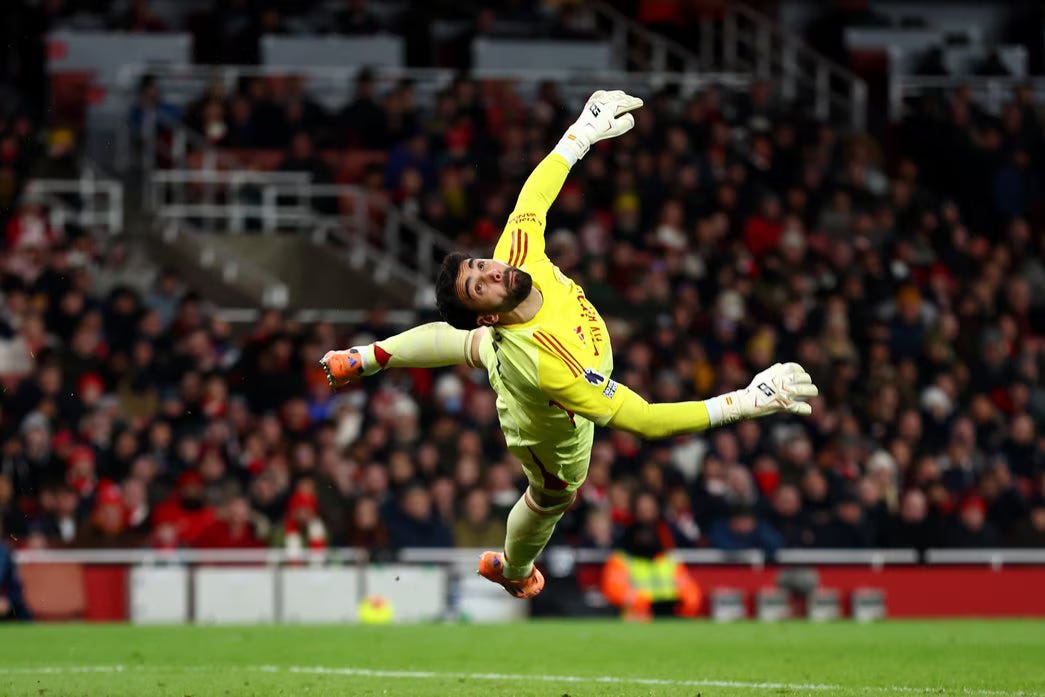
There are mainly two ways to read Arsenal right now. The first one is emotional, immediate, and reactive, the kind that is based around the 90 minutes. The kind that tightens with every missed chance, every late save, and every opponent’s half‑chance that feels bigger than it should. If you look at it from that angle, Arsenal looks like a team tempting fate. You could even probably say we are a team “getting away with it.” We then look like a team surviving rather than asserting.
The second one is the slower and quieter viewing, the people who are asking different questions. Questions not around how we’re winning, but why these wins feel uncomfortable in the first place. Because discomfort does not always mean fragility.
Arsenal’s first nine games of the season and the next nine have been a study in contrast. The results have been more or less consistent, and that’s the reason we are still stopped. But at one point the table threatened to open up into a seven‑point gap, and now it’s down to two. Twice, Manchester City have briefly climbed above us, and twice Arsenal have responded with wins. That alone, for me, tells something fundamental about this team’s mentality. But mentality is only a part of the story.
The recent wins have been hard watches: an injury‑time own goal against Wolves, a narrow one‑nil win at Everton, and then on Saturday yet another 2–1 victory against Brighton, rescued by a world‑class save from Raya. These are not the kind of victories that feel dominant. They don’t soothe the mind and they probably even raise some doubts. I may be overthinking, but I strongly believe that football discourse thrives on surface‑level opinions, which is why this narrative has emerged: Arsenal are getting away with it.
I feel narratives are rarely built on depth and are mostly built on feelings. What that narrative ignores is the most important currency in football: chances. Against Brighton, the game should have been over in the first half. The quality is lacking, but the volume of chances Arsenal created told a very clear story that the scoreline failed to reflect. This is where football becomes philosophical for me.
We tend to trust outcomes more than processes because outcomes are concrete. They feel honest. A missed chance feels like failure. A narrow win feels like survival. But football, like life, is not a series of isolated moments; it’s a system of probabilities playing out over time. Probabilities always balance themselves eventually. Winning games while underperforming your expected goals is not sustainable. I think everyone agrees on that. But isn’t the inverse also true? Failing to score from chance after chance is equally unsustainable. Scoring one goal from an expected nine is not a pattern; it’s an anomaly. At some point, the law of averages will intervene.
So the danger is not that Arsenal are conceding control; it’s that we’re confusing inefficiency with weakness. We’re mistaking poor finishing for poor structure. We’re treating missed chances as moral failures rather than temporary distortions. What this team is actually doing is far more interesting: they are continuing to create, even when confidence in and around the goal wavers. They are continuing to win, even when the game state is becoming nervy.
The hardest thing in elite sport isn’t playing well when everything clicks; it’s holding your nerve when it doesn’t. It’s trusting the work you’ve done when the reward is delayed. It’s believing that our control will eventually express itself on the scoreboard. So there’s an irony here that’s being missed. If Arsenal were creating nothing and scraping results, the concern would be valid. But we’re doing the opposite. We’re dominating phases, limiting opponents, and still leaving matches open longer than they should be. That is not because we’re vulnerable, but because we’re wasteful.
In that sense, it’s not Arsenal who are “getting away with it.” It’s our opponents, because teams are surviving against us when they shouldn’t be. They’re leaving games with hope intact when it should have been extinguished early. They’re walking away from matches relieved rather than overwhelmed because Arsenal failed to punish them. That won’t last, because at some point the finishing returns. At some point the margins flip. And when they do, these same performances will look very different in retrospect. The tight wins will become evidence of resilience. The patience will look like maturity, and this discomfort we are feeling right now will be reframed as growth.
Premier League seasons are not defined by how comfortable a team feels in November or December. They’re defined by what a team believes about itself when the game tests its faith. The way I see it, right now Arsenal are being tested psychologically. Can they keep trusting the process when the goals don’t come easily? Can they keep choosing control over chaos? Can they keep doing the hard thing, even when the easy narrative is available? So yes, we may be doing it the hard way, but sometimes the hard way is the only way that lasts.