
LEARNING TO STAY

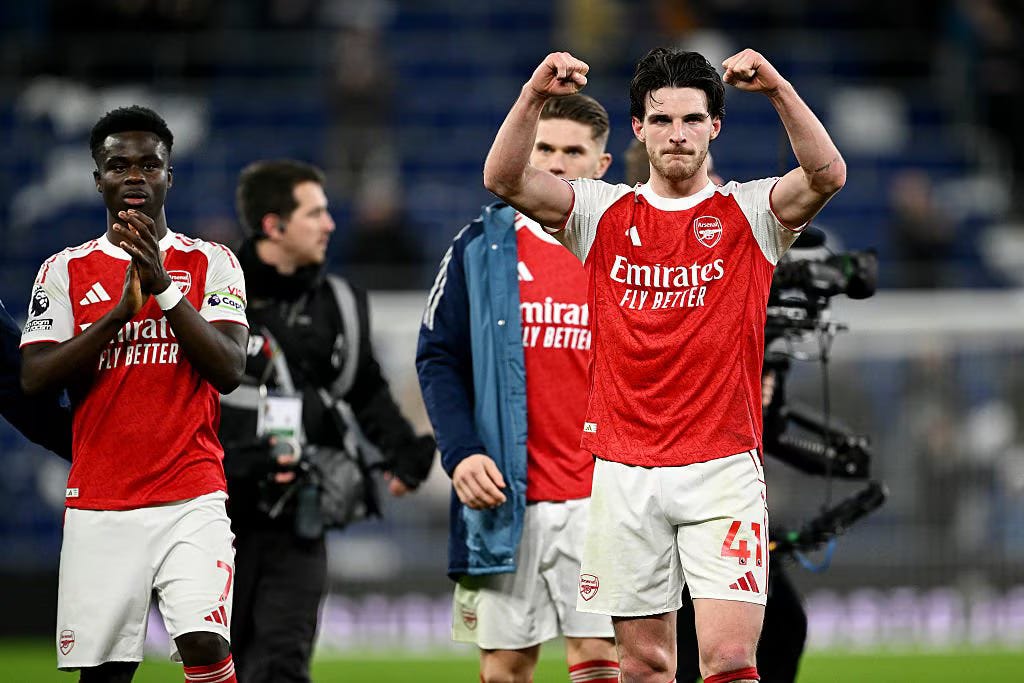
We are in the winter stretch of the season, and I don’t know if it’s just me, but every game, no matter the opponent, feels bigger than it should. These games become moments that aren’t about points so much as memory, and about what the body remembers before the mind catches up. Saturday at Everton was another one of those moments.
After the Wolves chaos, a game that scraped through the old scars, a trip to Everton was as frightening as it should be because of our recent history. We had only one win in six visits under Arteta. We were also playing with the sight of Manchester City briefly climbing above us. We were confronting the old question that Arsenal always seems to be asked, over and over again, just phrased differently each time: What happens when the pressure arrives? So anything less than a win wouldn’t just have been dropped points; it would have been a small rupture in belief, a mini disaster, not because of the league position but because of what it would have said about who we still are.
And we responded with something far rarer in the club’s recent history: control under discomfort. A 1-0 win that felt tighter on the nerves than it was on the pitch, a performance that becomes more reassuring the more you rewatch the game, the kind of win we, as fans, will still remember. Because one goal leads are never passive experiences for us Arsenal fans; they demand a lot of vigilance. We cannot relax, so we simply endure. Even when the game is managed, our mind stays switched on, waiting for the familiar twist. We don’t try to be pessimistic, but it’s just lived experience.
Yet what struck me most after the final whistle was the fixation on how we won, rather than that we won. There is a growing discomfort within our own fanbase with winning imperfectly. It feels as though control without chaos is somehow fraudulent. It feels as though dominance only counts if it looks a certain way. It feels as though growth must always be linear and expressive, and can never be quiet and functional.
Yes, the attack needs improvement, I think we can all agree that much is obvious. But context matters in football. We created enough chances to put the game to bed early: a one on one that hit the post, a cut back cleared off the line, and another that skimmed the post. Those three big chances on another day would be three goals and a very different discourse. The margins didn’t entirely fall our way, although they did favorably when VAR decided that Saliba’s challenge on Barry wasn’t sufficient for a penalty. So I actually take back the claim that the margins didn’t fall our way; they did, just in a different form.
The issue, for me, that we need to address is our efficiency in the opposition box, which is poor. In my opinion it directly affects the volume of chances we create because inefficiency breeds hesitation, and hesitation compresses games. But inefficiency is not the same as dysfunction. There is a difference between something being unfinished and something being broken. What mattered more was this: when the game demanded management rather than momentum, we provided it.
This was the first of a brutal run of six fixtures where we dropped points last season —the kind of sequence that quietly defines campaigns. Winning here didn’t just add three points; it shifted the weight and takes us to Christmas at the top of the league. Sorry if I spoil your mood ahead, because Christmas for Arsenal is never just a date; it is a mirror.
The last four times we were top at Christmas, we didn’t win the league. Each time, it felt like hope masquerading as progress, and twice it has been under Arteta in the previous three campaigns. So those memories don’t just vanish, because trauma lingers longer than tactics, right? Being top now feels confrontational. It asks a different question: Can you stay? Not “you can dream,” but “can you remain steady when the ghosts arrive?” Can you resist the urge to panic and to over‑compensate?
I often have this temptation to view healing as catharsis, but I guess real healing is often dull. It looks like winning games you used to draw, managing minutes you used to waste, absorbing pressure you once collapsed under, exercising restraint, and ultimately leaving with three points and no drama on a cold Saturday night in Merseyside.
Being top at Christmas doesn’t mean we’ve arrived, but responding to pressure away from home, in a place that has haunted us, when the table briefly turned against us, surely means something. For those of us who have stayed through the collapses, the almosts, and the narratives that were written before we were even ready, this feels like the kind of progress you learn to live with.