
OVERCOMING THE KRYPTONITE

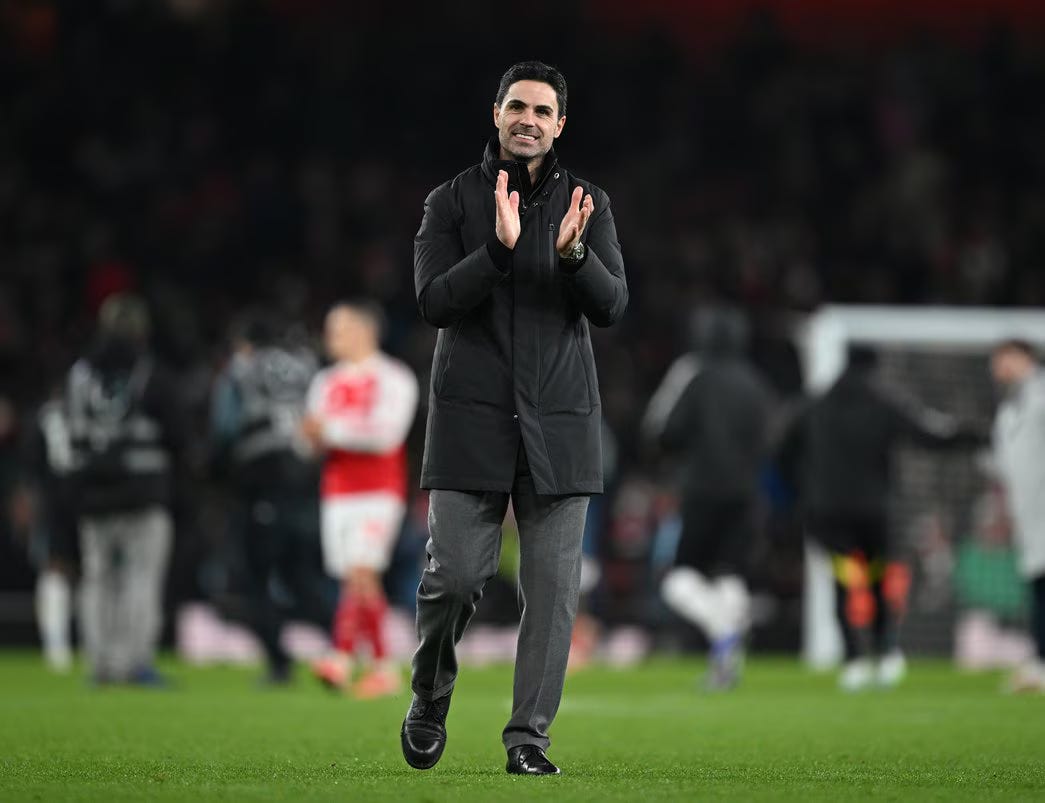
Some wins feel good. Some wins feel necessary. And then there are wins that feel cleansing because they quietly rewrite something inside you, the kind that loosens a grip you didn’t fully realize was still there. The 4–1 against Aston Villa at the Emirates was one of those.
Because Unai Emery was never just another opposing manager. He was never simply about tactics or systems or moments. He represented an unresolved chapter, a recurring doubt, a mirror held up to Arsenal at precisely the wrong time, a reminder that progress is never linear, and that some lessons repeat themselves until they are truly learned. And for that very reason, for a long time, Unai Emery felt like the kryptonite.
Football, at its core, is a game of patterns. We romanticise its randomness, but what really haunts supporters are the repetitions: the same types of goals conceded, the same games that slip away, the same opponents who arrive and leave with something they didn’t earn on the balance of play but somehow always manage to take. Unai Emery’s Villa became one of those patterns. It didn’t matter how much Arsenal evolved, how much more dominant, controlled, or mature they became under Arteta. Against Emery, something always felt slightly off, a decision too cautious or too brave. Inevitably, Arsenal would find a way to drop points and even lose.
Missing Declan Rice for this game was a huge blow, and his absence was felt immediately. Villa moved through our midfield too easily. They asked questions Arsenal didn’t answer at once. The game felt uncomfortably familiar, the kind of familiarity that brings unease rather than confidence. So 0–0 at half time felt like survival, and Villa are not a team you expect to fade. They are organised, purposeful, and drilled, and they usually finish the second half stronger. That is why our intent in the second half mattered.
Whatever was said by Arteta at half time worked wonders because Arsenal started to overwhelm Villa with calm authority. The tempo changed, the spacing improved, and the decisions became cleaner. At the centre of it all stood Martin Ødegaard, our captain. He set the terms of engagement and singlehandedly decided where the game would live. Leadership isn’t always about dragging your team forward; sometimes it’s about knowing when to accelerate and when to suffocate. Ødegaard played like someone who understood that this wasn’t just a game to be won but a story to be ended. The goals came, but they felt secondary to the feeling we created: inevitability, and Aston Villa were dismantled.
There’s a difference between beating an opponent and freeing yourself from them. This wasn’t revenge; it was something quieter and deeper. Arsenal didn’t try to prove anything. They played as if they were unburdened. Unai Emery didn’t lose because Arteta finally figured him out tactically. He lost because Arsenal no longer needed to define themselves in opposition to him. His presence no longer distorted our decision making, and his history no longer shaped our emotion. The kryptonite stopped working the moment Arsenal stopped believing in its power.
This season has been about deliberately putting old ghosts to rest. Arteta has been methodical in confronting Arsenal’s past big away grounds, fragile moments, late game management each addressed without spectacle. But this one was personal. Emery wasn’t just part of Arsenal’s history; he was part of Arteta’s. A figure who repeatedly found a way to outthink him, to disrupt him, to expose a blind spot. Yet, on this night, Arteta didn’t chase perfection. He trusted his process and, in doing so, crossed an invisible line from reactive growth to settled authority.
This win wasn’t about the scoreline, impressive as it was. It wasn’t about statements or headlines. It was about something far more fragile and far more important: belief without fear. Arsenal didn’t win because Villa were poor; they won because Arsenal were certain certain of who they are, certain of how they want to play, certain that the past no longer decides the present. I know you don’t get a trophy for that, but I strongly believe it’s how winning trophies becomes possible.
Ending the year on a high matters because it tells you where you stand emotionally. It tells you what still scares you and what no longer does. The job isn’t finished, and if 2026 is to be the year we cherish most, it will demand more growth, more pain, and more refinement. But nights like this are liberations. The kryptonite is gone because it was outgrown. And that, more than any result, is how you know this team is becoming something real.