
STOMACH FOR FIGHT

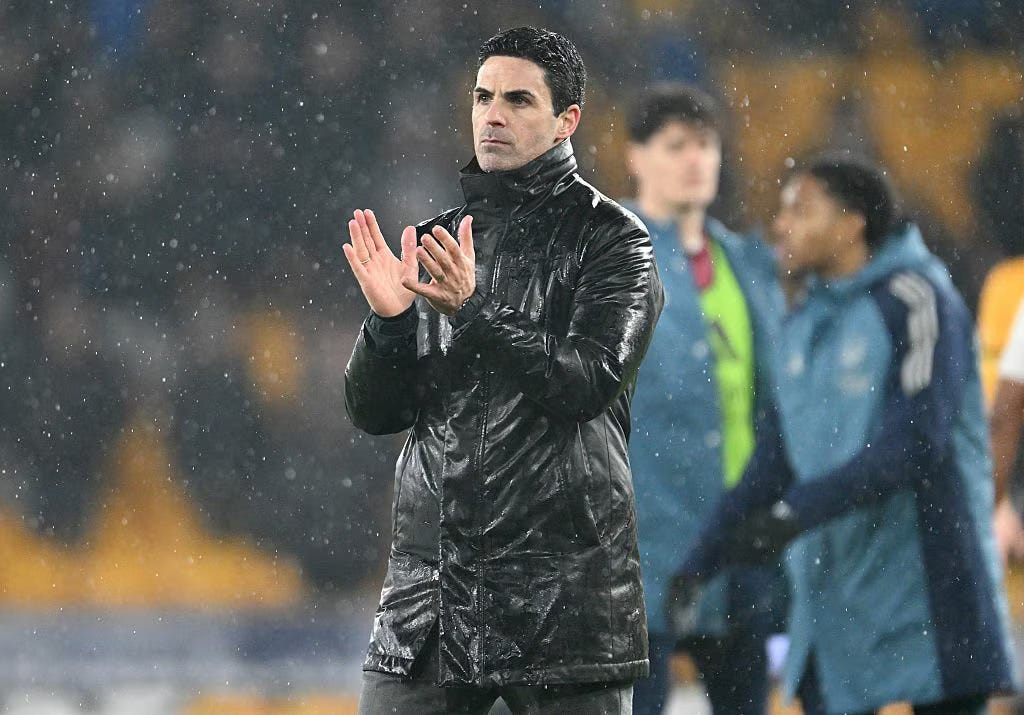
This is probably the lowest I have felt after watching an Arsenal game in a long time. I still can’t take my mind off the manner in which we dropped points. Two–nil up after 60 minutes against Wolves, who are bottom of the league. For what should have been a comfortable and in-control game which champions closed without thinking. We allowed it to become a chaotic 30 minutes, where our levels dropped, composure vanished, panic crept in, and suddenly, a match we should have buried became another entry in a familiar catalog.
The Gabriel–Raya mix-up felt like a ghost from the past. It took me straight back to the 2011 Football League Cup Final against Birmingham City. That sickening silence and disbelief in the moment where you realize something fragile has cracked. And what followed that season wasn’t just a lost trophy, it was capitulation on all four fronts. That’s what has truly unsettled me. For the first time in this title run, I’m not just worried about a result. I’m worried about what could follow. Because Arsenal don’t just drop points. We spiral, internalize and then unravel.
They say when the going gets tough, the tough get going. But this Arsenal side under Mikel Arteta has, at times, looked like a team that tightens when the oxygen thins. Almost as if we can’t handle an ounce of pressure, and pressure is the tax you pay for ambition. Here’s my philosophical dilemma of supporting this club right now: belief feels irrational as history tells you to brace for disappointment. Pattern recognition tells you this is the beginning of the slide as the rational fan prepares emotionally for the worst. Yet I still believe, and I’m not entirely sure why.
There’s a voice in my head that says: “You’ve seen this movie before. Stop fooling yourself.” Then another voice responds: “What if this is the scene where the script changes?” Maybe this is what it means to love a football club. You don’t support outcomes; you support the possibilities.
If there was one silver lining from that Wolves game, it was Bukayo Saka ending his 15-game goal drought. And more than the goal, it was his post-match presser. The tone and body language were definitely those of someone who is going to drag this team to the finish line. If there is one person in that dressing room who understands what this means not just in a sporting sense, but existentially for the fanbase — it’s Bukayo Saka.
Saka publicly said in 2020, during that abysmal run under Arteta, that the fans deserved better. He didn’t hide and took responsibility at an age where most players are still learning how to be professionals. He was central to the turnaround. He has carried us through the rebuild. He feels like the emotional bridge between the scars of the past and the hope of the present.
People throw around phrases like “mamba mentality” loosely. But when I think of the way Kobe Bryant described it as the obsession with being the best version of yourself, you do see that a lot in Saka. I’m not sure about every other player. I’m not even sure about Arteta. But Saka's performances absolutely convince me that he lives with that mentality.
The North London Derby is now a referendum. Either we send a statement to the league, and to ourselves that we are no longer that fragile team that collapses under scrutiny. Or we accept the tag that has stalked us for over a decade — perennial bottlers. The uncomfortable truth is this: football clubs, like people, develop identities. And breaking identity is harder than winning trophies. It requires confronting your own narrative. It requires doing the thing you historically failed to do.
Maybe this is the season where Arsenal finally looks at their history in the eye instead of running from it. Maybe this is the turning point we look back on in May and say, “That was the wobble that forced them to grow.” Or maybe it’s the beginning of something we’ve seen too many times before.
What I do know is that supporting Arsenal has never been about certainty. It’s about faith in the possibility of transformation. It’s about choosing belief despite the evidence. So yes, there’s fear, doubt and even that cynical voice whispering, “You know how this ends.” But I’m doubling down on my belief anyway. And until proven otherwise, I choose to believe that this time, it’s going to be different.