
THE SIX-POINT ILLUSION

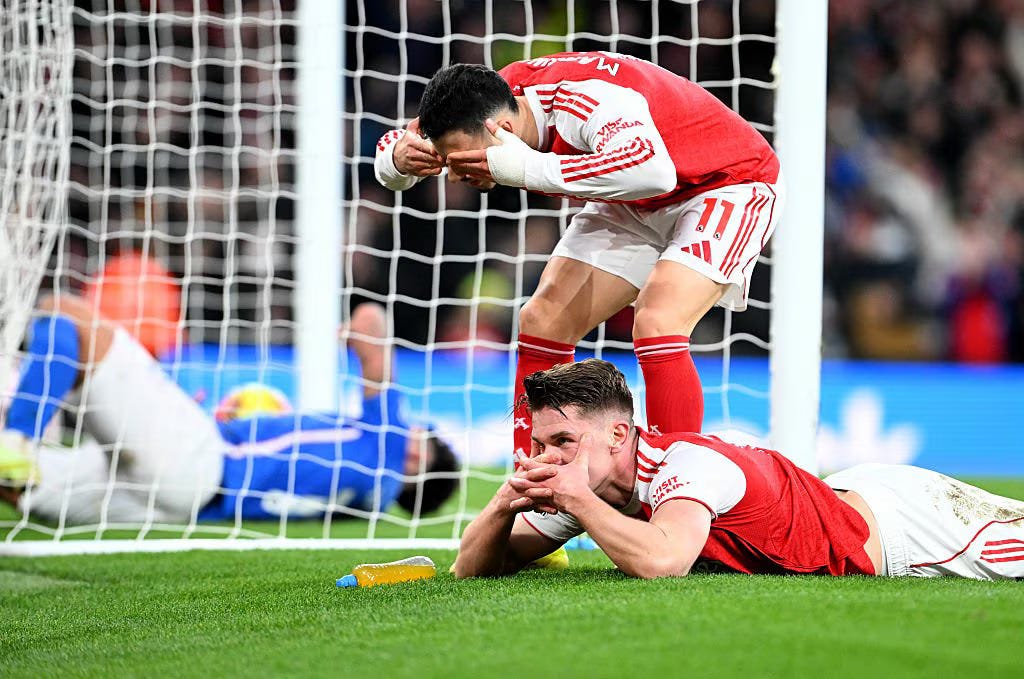
This was one of those weekends that should have felt uncomplicated. A testing but professional 3-0 win against a Sunderland side that came to the Emirates with courage rather than fear. Three open-play goals, Zubimendi scoring a goalazo, and Gyökeres with a brace that hinted at his hunger and desire to succeed at Arsenal. There was a maturity in the performance, and yet, 24 hours later, the mood shifted.
Manchester City won late at Anfield. A brilliant win for them and the kind of win champions produce, which also feeds into their aura. And suddenly, doubt resurfaced amongst the Arsenal fanbase. The familiar anxiety returned like muscle memory. As if our victory had quietly evaporated. The gap remains six points. It was six before the weekend, and it is six after the weekend. So, what changed? In my eyes, nothing tangible, only emotion. And that, perhaps, is the real battle.
Supporting Arsenal in a title race against Pep Guardiola is not just a sporting experience; it is a psychological one. We are not only competing against a team; we are competing against history, patterns, and precedent. Guardiola has never lost back-to-back league titles. He has never lost a run-in. These facts sit in the collective consciousness like immovable objects. But football is not played in the past. It is played in the next ninety minutes. We speak often about “mentality” when referring to players. But what about the mentality of supporters? What does it mean to truly believe? Is belief loud and defiant? Or is it quiet and disciplined?
There is something revealing about feeling deflated after your own team wins 3-0. It suggests that somewhere along the line, we have outsourced our emotional state to Manchester City. Their result dictates our mood, their resilience becomes our fear, and their narrative overshadows ours. But control in football, as in life, is selective. Mikel Arteta cannot control what happens at Anfield. The players cannot control a late winner scored at Anfield. What they can control is preparation, intensity, and focus for the next game. And what can we as fans control? Perspective.
I understand the anxiety and in no way will dismiss it. We have been here before, close enough to see the summit, but not close enough to stand on it. The scars are recent, and the memory of faltering is visceral. So, when City wins in dramatic fashion, it doesn’t feel like a single result. It feels like a script repeating itself. But history is not destiny, is it? “There’s always a first time for everything” sounds cliché. Yet it is also the foundation of every breakthrough in sport. Every dynasty eventually falls, and every pattern eventually fractures. The question is never whether history exists. The question is whether you are brave enough to challenge it.
This Arsenal side is not the previous season’s Arsenal side. There is a different texture to them now. Less chaos, more calculation. Less emotional volatility, more composure. When Sunderland tried to disrupt the rhythm, we didn’t panic. When the game demanded patience, we showed it, and when the moment arrived, we took it. Three open-play goals are not an accident. They are a statement of structure working as intended. And perhaps that is what we should be holding onto.
Title races are rarely won in moments of euphoria. They are won in stretches of emotional neutrality. In refusing to get too high after a big win. In refusing to get too low after a rival’s statement. I feel the real discipline is psychological. City winning at Anfield does not reduce our points total. It does not shrink our advantage. It does not retroactively weaken our performance. It simply means the race continues. And if the race continues with us six points clear, why should despair be the dominant response? Fear is understandable, but surrender is absolutely not.
There is also something about our identity as fans. For years, we were accused of being too optimistic and too romantic. Then we became cynical and reactive. Now we oscillate between belief and dread within 24-hour cycles. But maybe maturity as a fanbase looks like steadiness. Acknowledging that Guardiola’s record is formidable. Acknowledging that run-ins are brutal. Acknowledging that nothing is guaranteed. And still choosing to focus on what is ours.
The onus is on Mikel and the players to get the job done. That’s it. That is all that needs to be done. We don’t need to rewrite Guardiola’s legacy. We don’t need to prove historical theories wrong. We simply have to win the next game. And then the next. And then the next. Summits are not reached by staring at the mountain. They are reached by taking the next step.
If this team falters, let it be because they were not good enough over 38 games and not because they were psychologically beaten by a result in February. If they fall short, let it be after exhausting every ounce of control they possess. But if they don’t? If this is the season where precedent fractures? Then we will look back at weekends like this and realize the real test was emotional. It was about whether we could hold our nerve when the familiar fear crept in.
Six points clear. Three open-play goals. Our number nine scored twice. Our midfield is stamping its authority. There are worse positions to be in. The noise will continue, City will continue to win games, and they might look inevitable. But inevitability is an illusion until the trophy is lifted. Until then, all that exists is the next game. Win it, then win the next, and let history deal with itself.